
Growth is exciting, but for manufacturers, it can also be overwhelming, especially when demand is rising, customer expectations are increasing and production teams are stretched thin. You know expansion is needed, but taking the wrong steps can lead to quality issues or financial strain.
Scaling manufacturing successfully requires more than new equipment or bigger facilities. It takes a clear production growth strategy, one that protects quality, manages risk and keeps operations sustainable. Below, we explore key manufacturing strategies for growing businesses, enabling you to scale your production without scaling risk.
Before scaling, it’s essential to ensure your business is truly ready. A proper growth management approach starts with stability and foresight.
The following are a few key signs that you might be ready to scale:
When these factors align, your business is well-positioned to confidently implement a scalable production strategy.
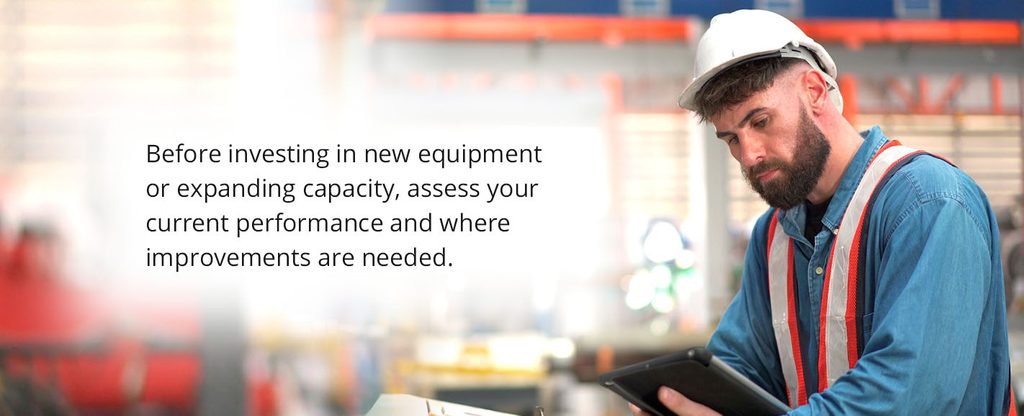
Scaling without preparation can quickly create chaos on the shop floor. Before investing in new equipment or expanding capacity, assess your current performance and where improvements are needed.
Bottlenecks can be a serious threat to scaling manufacturing efficiently. They slow production, increase costs and limit throughput.
Conduct a workflow analysis to pinpoint where production slows down. Look at some of the following factors:
Once you know your bottlenecks, you can target them strategically through equipment upgrades, cross-training or process redesign before they become roadblocks to growth.
Capacity planning ensures your people, equipment and space align with future demand. Without it, even small demand spikes can strain production and erode efficiency.
Track these key metrics to support your planning:
Technology plays a major role in scaling production smoothly. Outdated machinery or manual systems can’t always keep up with modern demand. To assess your readiness for growth, evaluate whether your current setup can handle increased throughput. Look at equipment age, downtime rates and automation potential. When technology supports your operations, scaling becomes predictable rather than chaotic.
There’s more than one path to growth, and the right choice depends on your company’s goals, resources and appetite for risk.
Growing internally gives you complete oversight of quality, intellectual property and scheduling. However, it requires significant investment and long lead times.
The advantages of this route include:
Some of the disadvantages may also include:
Outsourcing through a trusted contract manufacturer allows companies to scale production quickly without the financial strain of building new capacity.
Partnering externally provides the following pros:
This approach works well for original equipment manufacturers (OEMs) that want to expand strategically while keeping capital expenditures low and manageable.
Hybrid or phased models blend internal control with external agility. For example, you might do the following:
Expanding manufacturing can pose significant challenges. Maintaining product consistency and financial stability during rapid change requires a balance of planning and adaptability.
Quality systems need to evolve as production volume grows, but that doesn’t mean adding unnecessary bureaucracy. The goal is consistency, not complexity.
The following can help you maintain standards as you scale:
These practices can help ensure quality remains embedded in every process, even as production increases.
Scaling manufacturing requires strategic financial management. Without it, even successful growth can strain liquidity.
Consider the following financial priorities:
Get answers to your pressing questions about scaling your manufacturing business:
For manufacturers that need to scale quickly and safely, strategic outsourcing offers a great path forward. It eliminates the heavy capital burden while maintaining production quality and consistency.
That’s where PBZ Manufacturing comes in. As an experienced contract manufacturer with the facilities, equipment and expertise to handle large-volume production, we help OEMs scale efficiently, without compromising quality. PBZ offers contract manufacturing solutions to help you streamline your supply chain, lower operational costs and reduce project completion times.
Contact us today if your organization is ready to expand capacity and meet growing demand.
Linked Sources: